


Here is a recap of some of the top highlights from DCNR in 2025. These accomplishments would not be possible without the hard work and dedication of the more than 2,700 full-time and seasonal employees who embody public service and DCNR's mission.
Still Open. Still Awesome.
As federal closures to popular national park campgrounds left many outdoor enthusiasts without access to beloved destinations, DCNR stepped up and reminded the public that Pennsylvania's public lands are Still Open, Still Awesome. We saw an immediate increase to campsite bookings and posted a strong year of having our 7,100-plus campsites used.
Following an early surge in camping in areas where federal campsites were closed, the momentum for visiting public lands continued through the summer, a reminder of the critical role DCNR plays for the millions of residents and visitors who enjoy nature in Pennsylvania. The cherry on top of a strong summer recreation season? One of our top outdoor recreation destination parks, Ohiopyle State Park was ranked No. 1 of the 'Great-Value Stays' for U.S. state parks. Eight others ranked in the top 100.

Advancing Core Agency Priorities and Stewarding Pennsylvania's Natural Resources
DCNR's Bureau of Forestry released a new strategic plan, Forests for All, emphasizing strengthening forest management foundations, connecting with people and communities, and investing in its staff and teams. The plan is a roadmap to ensure Pennsylvanians' Constitutional right to clean air, pure water, and the preservation of the environment while strengthening forestry management and public engagement all across the Commonwealth.
The Bureau of Geologic Survey was selected to participate in a $4 million aerial survey to generate high-resolution data to better understand the distribution of "critical minerals," materials vital to American industry and vulnerable to disruption. This multistate effort will not only guide future geological and tectonic discoveries but also support businesses in pursuing responsible and well-informed mineral exploration.
Geological Survey Quick Facts
 Governor Josh Shapiro visited DCNR staff in Michaux State Forest to survey the damage and call for increased support of firefighters.
Pennsylvania’s wildland firefighters again answered the call of duty, deploying to western wildfires throughout the summer. Pennsylvania's spring wildfire season was particularly active as a result of an extremely dry winter. Bureau of Forestry staff suppressed and contained three large wildfires:
- Packerton (Carbon County)
- Thompson Hollow (Cumberland County)
- Hammonds Rocks (Cumberland County)
Wildfire Quick Facts
Continued Leadership in Sustainability, Conservation, and Environmental Health
Under the leadership of recently retired Facility Design and Construction (FDC) Bureau Director Alfred Uzokwe, DCNR continued its commitment to investing in sustainability in 2025.
DCNR boasts 18 LEED-certified facilities thanks to the work of FDC under Alfred's stewardship.
DCNR marked a major sustainability milestone — celebrating 30 years of conservation leadership by unveiling its 30th solar array on public lands. The celebration also honored a range of stormwater and ecological improvements to Gifford Pinchot State Park where the event was held.

Work informed by Alfred’s team, and our also recently retired Director of Applied Climate Science Greg Czarnecki, helped us uplift our strong record of environmental stewardship.
The Bureau of Facility Design and Construction (FDC) oversaw the removal of Indian Dam at Lehigh Gorge State Park and secured permit for the removal of Hawk Dam at Hickory Run State Park, which will be removed in 2026. FDC completed 72 dam inspections, 81 construction contracts, 209 bridge inspections, and 634 building inspections in 2025.
Here is a look at some of our other highlights in sustainability and conservation for the year:
At Prince Gallitzin State Park, an event highlighted a ground-mounted array that reduces greenhouse gas pollution by about 700 tons annually and saves roughly $100,000 each year in electricity costs — savings that have been reinvested in park improvements such as new picnic tables and grills, roof repairs, and an electric bike for rangers. The array offsets most of the park’s electricity use, including the two public EV charging stations at the Marina Boathouse.
Photo courtesy of PennEnvironment

DCNR unveiled a new naturalistic fish passage at Shikellamy State Park, a structure that allows aquatic life to swim around the dams, which provides benefits to native species such as American shad and eels, and downstream benefits to the Chesapeake Bay.

There were 49 oil and natural gas wells plugged in 2025 in state forests. Twenty-seven of those wells were plugged by operators on lease and administrative (severed) tracts in Clear Creek, Elk, Forbes, Loyalsock, Moshannon, Susquehannock, Tiadaghton, and Tioga state forests, and Laurel Ridge State Park. The remaining 22 wells were orphan and abandoned wells plugged by the Department of Environmental Protection, including 20 in Cornplanter State Forest and two in Kinzua Bridge State Park. In conjunction with the well plugging, approximately nine miles of pipelines and two compressor facilities were taken out of service and the sites rehabilitated.
A stream restoration project at Jacobsburg Environmental Education Center restored 1,600 feet of Bushkill Creek, reducing impact of floods, improving public access, and supporting outdoor education. Projects like this are vital to the long-term health of our public lands and DCNR will continue to support these on state parks and forests, and in communities across Pennsylvania.

DCNR's Bureau of Forestry improved wildlife habitat by contracting for approximately 20,000 acres of timber harvests in 2025, stimulating rural economies and providing raw material for Pennsylvania’s timber industry.
We inducted several state-owned public lands into the national Old-Growth Forest Network bringing the total in Pennsylvania 41, just ahead of Ohio! These critical old-growth forests are particularly valuable as they retain more carbon and nitrogen than younger forests and improve water and air quality. Here are the highlights from 2025:

DCNR staff are always about planting more trees and 2025 presented many opportunities to promote this message in communities across the Commonwealth. Here are a few examples:
- In Harrisburg, Shapiro Administration Plants 33 Trees as Part of $500,000 Statewide Community Investment
- Shapiro Administration Invests $130,000 to Plant 700 Trees Along York County Stream to Improve Local Water Quality and the Chesapeake Bay
- Department of Conservation and Natural Resources Marks Earth Day by Planting Over 400 Trees at Pottstown School District
- On Arbor Day, Department of Conservation and Natural Resources Launches New Way for Pennsylvanians to Support Tree Planting Across the Commonwealth

- PRGA Solar
- Shikellamy Fish Passage
- Wells
- Stream restoration JEEC
- Timber Harvests
- OGFN
- Tree Plantings
It is important to note, these are just a handful of examples of the environmental stewardship DCNR undertakes for forests. Staff in the Bureau of Forestry work on plans with private forest owners, urban, and rural communities to enhance Pennsylvania’s tree cover and to ensure life-sustaining trees are supported in every corner of the Commonwealth. Here are some numbers showing the tremendous impact of DCNR staff in the Bureau of Forestry:
Forestry Quick Facts
Finally, the creation of the Pennsylvania Woodland Resilience Enhancement Network (PWREN) with $5 million in funding gives forest landowners the opportunity to apply for reimbursements of up to $25,000 to strengthen private woodlands against pests, disease, and the impacts of climate change.
Expanding Access to Nature and the Outdoors through Mosaic
In 2025, DCNR formally launched Mosaic, a mission-driven, intentional effort to make both the department’s workplace and Pennsylvania’s outdoor places and spaces more inclusive, accessible, and welcoming to all. Grounded in the principle that public lands exist for everyone’s enjoyment, Mosaic reach is agencywide and guides DCNR’s development of all programs, services, and experiences to meet the needs of all communities.
Guided by a three-year action plan with clear goals and measurable outcomes, Mosaic centers on five key pillars: Education; Workforce; Community Engagement; History of Public Lands; and Equity and Accessibility.
This year, DCNR expanded access to the outdoors by addressing language and physical accessibility barriers and by partnering with other state agencies and community organizations to host inclusive outdoor activities and events, including mental health and sensory-friendly experiences.
DCNR also implemented more inclusive communication practices to reach broader audiences and shared new untold cultural histories tied to public lands, helping more people to feel a sense of belonging in Pennsylvania natural places. Mosaic’s impact was highlighted nationally when DCNR’s DEIB Director appeared on the syndicated Sherri Show to encourage more communities to explore and enjoy Pennsylvania’s outdoors.

Here are some of the top highlights from DCNR’s 2025 Mosaic efforts:
Pennsylvania is one of only two states in the nation with two Thrive Outside communities — in both Pittsburgh and Philadelphia — among just 15 designated nationwide.

DCNR hosted the Armstrong Indiana Clarion Drug & Alcohol Commission, Inc. and dozens of Pennsylvanians in recovery from substance use disorder for a Recovery in Nature wellness event at Sinnemahoning State Park.

DCNR joined the departments of Aging and Health to unveil a new toolkit to help older Pennsylvanians connect with the outdoors and improve their overall health.

Access to historic Mifflin farm, documented Underground Railroad site and the location of a pivotal Civil War battle, was opened to the public for the first time in 225 years, with the support of DCNR.

Thanks to First Lady Lori Shapiro’s advocacy and the Governor’s Advisory Commission on Next Generation Engagement, Pennsylvania’s state parks now provide free menstrual products in 68 visitor centers, park offices, and educational centers. This initiative promotes menstrual equity, ensures no one has to cut outdoor activities short due to lack of access, and includes signage in English and Spanish for easy navigation.

The Washington Crossing Interpretive Trail features an ADA-accessible riverside path connecting the visitor center to the Delaware River, allowing all visitors to explore the historic route of Washington’s crossing. Ten new interpretive waysides, featuring tactile and visual elements for visitors with sight impairments, will highlight the diverse people involved, including the contributions of women and people of many races. Visitors can also board a life-size Durham boat replica, offering an immersive experience of the vessel and perfect photo opportunities, with full installation planned for spring 2026 in honor of America’s 250th anniversary.
Finally, thanks to investments from DCNR and the Pennsylvania Department of Transportation, a new ADA-accessible pedestrian bridge at Adams-Ricci Community Park in East Pennsboro Township, Cumberland County, was built. The bridge safely spans a busy state road, connecting the east and west sides of the park — and in doing so, significantly improves access to recreational fields, hiking trails, Conodoguinet Creek, and walking paths that lead to the Pine Hill Arboretum. The project prioritizes public safety and accessibility, while strengthening community connection to the outdoors.

- Thrive Outside
- DDAP
- Older Pennsylvanians
- Mifflin Farm
- Menstrual Products
- Washington Crossing
- Adams-Ricci
Investing in Park and Forest Infrastructure to Improve Outdoor Experiences
DCNR’s Bureau of State Parks announced new Timberline glamping accommodations across seven state parks, offering 55 furnished, climate-controlled sites that provide a comfortable, modern way to experience the outdoors starting in spring 2026. The partnership will also generate revenue for future park improvements and strengthen ties between state parks and nearby communities through locally sourced add-ons and experiences.
Other state park infrastructure investments include:


Gifford Pinchot State Park
An $8 million investment in improving the campground facilities at Gifford Pinchot State Park in York County. This expansive project will upgrade one of the most popular campgrounds in Pennsylvania and bring it up to more modern standards.
Learn More)
Ricketts Glen and Lackawanna State Parks
Campground improvement projects at Ricketts Glen and Lackawanna state parks to replace the campground shower house and restroom facilities with modern, accessible, and family-friendly amenities.
Learn More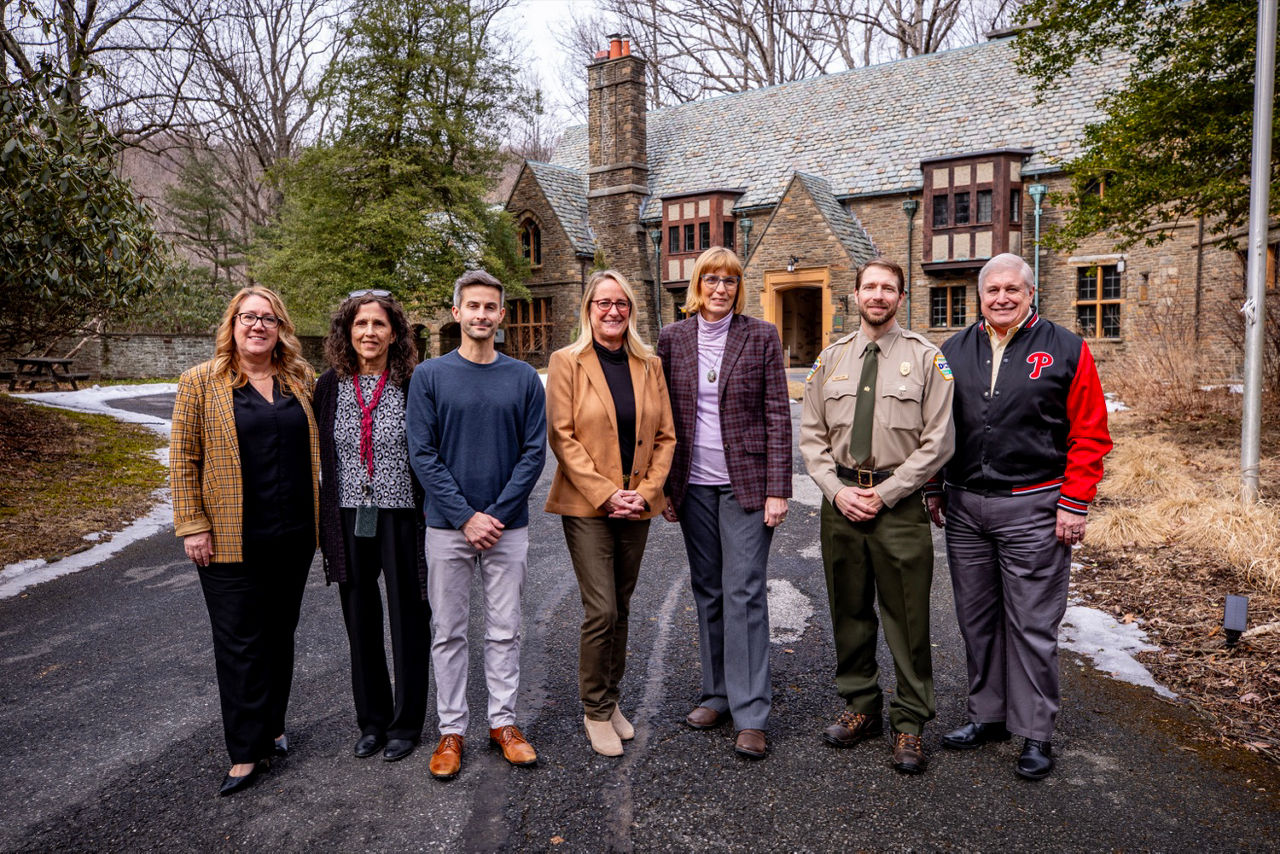
Nolde Forest Environmental Education Center
Renovations of C.H. McConnell Environmental Education Hall at Nolde Forest Environmental Education Center improved the hands-on experience of the more than 4,000 K-12 students who visit the center annually.
Learn More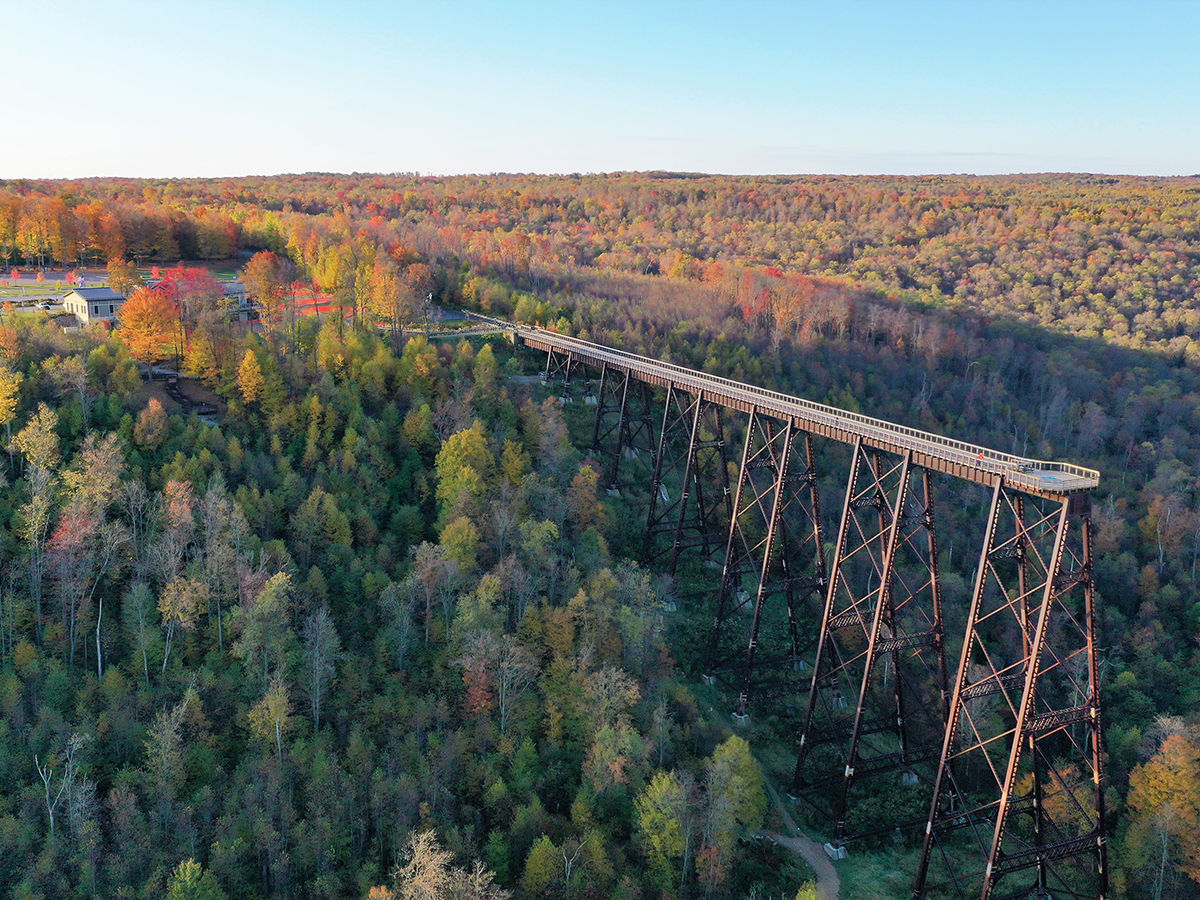
Kinzua Bridge State Park
Construction continued at Kinzua Bridge State Park on the rehabilitation project for the iconic Skywalk, though workers paused to ensure visitors were able to take in the amazing fall foliage viewing opportunities in the area. The project is expected to be completed in 2027, with another break in the work to allow for fall foliage viewing this year!
Learn More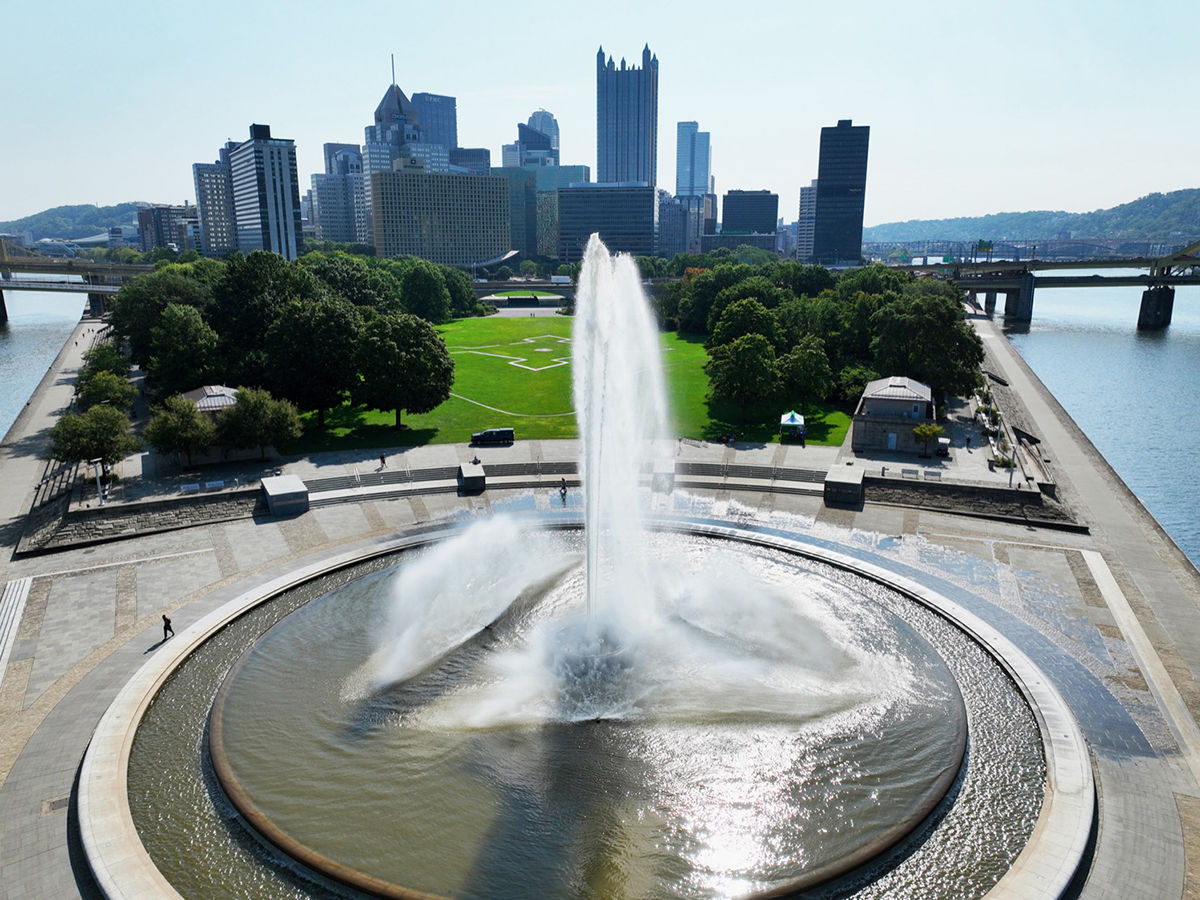
Point State Park
Work finished months ahead of schedule on a $3.4 million renovation of Point State Park in Pittsburgh to upgrade walkways, utilities, lighting, landscaping, and the park’s iconic fountain ahead of major 2026 events, including the NFL Draft and America’s 250th anniversary.
Learn MoreThese and other improvements across state parks were critical to the millions of visitors who attended state parks in 2025. State parks hosted 306,800 participants at more than 9,600 educational programs. Other state park news from 2025 includes:
Parks Quick Facts
Major infrastructure improvements were not just confined to state parks. After years of planning and site work the new Delaware State Forest Resource Management Center opened in the fall of 2025. This modern facility is LEED Silver-certified, offers informative and beautiful interpretive displays to the public, and a state-of-the-art workspace for district staff.

Investing in Communities to Elevate Local and Regional Initiatives
Time in nature benefits all of us and DCNR continues to be a strong supporter of local, community outdoor opportunities to boost physical and mental health across the Commonwealth. Pennsylvania’s 14,000-plus miles of trails were a key focus for DCNR, where the agency achieved a significant amount of progress in 2025, including closing five major trail gaps. Here are some examples:
The first phase of the Musser Gap Trail in Rothrock State Forest was completed in 2025, marking a significant step toward developing approximately 50 new miles of sustainable trails that will connect communities and provide outdoor adventure in Centre and Huntingdon counties. The long-term vision is a 50-mile loop system of natural-surface, sustainable biking, hiking, and equestrian paths that connect with hundreds of existing miles of trails throughout Rothrock State Forest. Sustainable trails are designed to minimize environmental impact, resist erosion, and reduce maintenance needs, while providing a safe, enjoyable experience and balancing long-term ecological health, climate resilience, and economic and recreational sustainability.

Investments from DCNR and the departments of Transportation and Community and Economic Development helped create the Christian to Crescent Trail Connector, a long-anticipated link in the five-county Schuylkill River Trail that now provides a fully off-road route between Center City and South Philadelphia.

The final phase of the expansion of the South Bethlehem Greenway is underway thanks to investments from DCNR, which will create 14 miles of contiguous trail, improve trail connectivity across the Lehigh Valley, and close one of Pennsylvania’s Top 10 trail gaps.
A new 1.7-mile trail connector at Warriors Path State Park in Bedford County is helping transform Saxton Borough into a regional hub for outdoor recreation. The new section links Warriors Path to the Riddlesburg Trailhead and has already driven a 47 percent increase in park visitation compared to last year.

In the PA Wilds 13-county landscape a priority trail project, one of DCNR’s Top Ten Trail Gaps, finally came to fruition. The 3.4-mile Pine Creek Rail Trail extension now directly connects trail users to Wellsboro, the charming gateway community to the Pennsylvania’s Grand Canyon’s outdoor recreation adventures for many decades. Critical investments from DCNR and Pennsylvania Department of Transportation – $3.5 million and $2.5 million, respectively – made the project possible, ensuring a safe, direct route between Wellsboro’s downtown shops, restaurants, hotels, and the nationally recognized rail trail.

- Musser Gap
- Christian to Crescent
- South Bethlehem
- Warriors Path
- Pine Creek Rail Trail
The department’s work to support motorized recreation trails and off-highway vehicle riding opportunities remains steadfast with the continuation of the 600-mile Northcentral Regional ATV Trail. This regional destination has been a boost to the Pennsylvania Wilds Region and outdoor recreation in Pennsylvania broadly. It also led to the Department of Transportation creating a new process where municipalities or regional organizations that manage trail networks can request an ATV route designation. Other advancements in ATV opportunities include:
- The conservation of the 24-mile Piney Rail Corridor in Clarion and Jefferson counties for motorized and non-motorized recreation, which Lieutenant Governor Austin Davis announced in April 2025. Stretching across approximately 550 acres, the Piney Rail Corridor spans six townships and connects with more than a dozen others in Clarion and Jefferson counties. It is expected to generate significant tourism revenue in the Pennsylvania Wilds and ensures the long-term conservation and use of the trail, while contributing to local economic growth and community development.
- Significant investments in ATV and snowmobile projects of $2.1 million and $1.4 million, respectively, supported 14 projects across the Commonwealth aimed at expanding motorized recreation opportunities.
Supporting Communities Across Pennsylvania, One Project at a Time
DCNR’s Bureau of Recreation and Conservation (BRC) builds connections between Pennsylvanians and the outdoors through recreation enhancement, natural resource conservation, and community revitalization efforts. This is done working with communities and organizations across Pennsylvania to provide grants and technical assistance support for local recreation projects, trails and greenways, Heritage Areas, open space, rivers conservation, and environmental education programs. In 2025, BRC closed 317 grant projects. These projects included:
Community Quick Facts
One of the biggest impacts of BRC in 2025 was the bureau’s annual grant workshop. More than 689 people attended, beating the previous record by nearly 100 people. The record attendance demonstrated the ever-increasing interest and confidence in the program and demand for financial and technical assistance for recreation and conservation projects and initiatives. Other important BRC accomplishments include:
- Regional staff delivered 36 regional grant workshops, totaling more than 1,700 participants.
- Bureau staff took part in more than 90 program and partner celebrations such as groundbreakings, ribbon cuttings, and planning project kickoffs — a record year for events.
- The bureau’s Governor’s Science and Technology Fellow successfully completed a Meaningful Engagement Grant Equity Analysis during their one-year program. The fellowship employs recent college graduates who have a drive to help make Pennsylvania a better place to live and want to explore careers in science, technology, engineering, and math (STEM).
The Bureau of Recreation and Conservation also supported 47 partnerships, including the work of Heritage Areas and Conservation Landscapes, including:
The PA Route 6 Heritage Corridor was designated as Pennsylvania’s newest, and longest, Scenic Byway. The newly designated section spans 211 miles through Warren, McKean, Potter, and Tioga counties, encompassing the main roadway as well as extensions and offsets of U.S. Route 6. According to the 2025-2029 PA Statewide Comprehensive Outdoor Recreation Plan (SCORP), ‘scenic driving’ ranked as the No. 5 most favorite outdoor recreation activity.
The Rivers of Steel National Heritage Area launched the Traditional Trades Workforce Development Program, which is designed with a robust curriculum focusing on essential skills in welding, carpentry, and masonry, framed within the tenets of historic restoration and preservation. Participants will attain industry-recognized certifications that uniquely position them for entry into the workforce, trade union membership, or continued education in the trades.
The Lackawanna Heritage Valley National Heritage Area continues support for the Bike Buddy Program, empowering individuals to learn how to confidently participate in outdoor recreation through adaptive cycling. The goal is to minimize potential barriers to adaptive outdoor recreation access by training riders and caregivers in safe, independent, adaptive bike use along the Lackawanna Heritage Trail through scheduled, individualized sessions with trained volunteers.
The Lumber Heritage Region unearthed untold stories at Bark Shanty Civilian Conservation Corps (CCC) Camp with the Bureau of Forestry, the PA Lumber Heritage Museum (PHMC), and Indiana University of Pennsylvania. The organization has been working to conserve and interpret the site of segregated camp located in Susquehannock State Forest and developed an online video to memorialize the history and the project.
Heritage areas can be fun too! The National Road Heritage Corridor, the Lincoln Highway Heritage Corridor, and the PA Route 6 Heritage Corridor teamed up for a friendly competition which captured quintessential road trip tunes from each region in a playlist battle. The public was asked to submit songs that capture the feel of the open road, the character of the towns, and the heritage of the landscapes. A wildly popular social media event for all three, the PA Route 6 Heritage Corridor’s playlist ultimately came out on top.
- Route 6
- Rivers of Steel
- Bike Buddy
- Lumber Heritage
- Road Trips
The Conservation Landscape Program, created by DCNR, celebrated 20 years of place-based collaboration in eight regions across Pennsylvania. More than 2,000 partners have been engaged across these regions, with nearly 320,000 acres of lands conserved as a result of this program, and approximately $4.25 million dedicated for mini-grant funding. The program has attracted more than $180 million dollars in non-DCNR grant funding from many sources.
DCNR, with the help of students from Shippensburg University, created a Story Map that highlights each landscape and shares best practices being used to achieve conservation, outdoor recreation, and community revitalization goals through the program.


The Kittatinny Ridge Conservation Landscape partners realized a major milestone with the Kittatinny Ridge’s designation as a Sentinel Landscape, one of five new Sentinel Landscapes nationwide. This brings more opportunities and resources for coordinated and strategic land conservation and stewardship within this critical corridor
DCNR Serving Across the Commonwealth
DCNR’s impact goes beyond the focused initiatives outlined in this report. Some of the great work that DCNR staff accomplished in 2025 includes:
DCNR Park Manager Justin Waid helped to save the life of a swimmer at Tobyhanna State Park in northeastern Pennsylvania and was recognized by Governor Josh Shapiro with a Governor’s Award for Excellence. Although off-duty, Waid arrived on the scene and without hesitation, joined the ranger and an EMT in providing critical emergency care.

State Parks released the first complete digital trail data resource ever compiled for Pennsylvania state parks, mapping more than 1,750 miles of formal trails across 119 parks.
Pennsylvania celebrated the Delaware River as the 2025 River of the Year with a paddle and celebration at Minisink Park. Coincidentally, the 30th Delaware River Sojourn, which highlighted the river’s legacy, restoration and local impact on communities during DCNR’s 30th anniversary. The river is home to the Delaware Water Gap National Recreation Area, one of the top 20 most-visited national park areas in the country.

The Path of the Flood Trail, which follows the historic route of the catastrophic 1889 Johnstown Flood, attracts more than 80,000 visitors annually and was named the 2025 Trail of the Year. The Path of the Flood Trail is composed of crushed stone and pavement, making it accessible for a variety of activities, including biking, hiking, running, birdwatching, cross-country skiing, and snowshoeing. Its historical significance is further elevated by its inclusion in the 9/11 National Memorial Trail.

State Parks finalized a 35-year lease allowing the PA Wilds Center for Entrepreneurship to continue operating Conservation Shops at Kinzua Bridge and Leonard Harrison state parks, ensuring long-term support for rural small businesses whose products make up 90 percent of store inventory. As part of the agreement, the PA Wilds Center will invest $200,000 in park improvements and explore expanding its successful public-private model across the region’s 13 counties and 29 state parks.
A new-look fall foliage report debuted in 2025, featuring a fresh design, dedicated pages for each week, and detailed information by region. Fall is a major driver of Pennsylvania’s tourism industry, which generated $83.9 billion in economic impact, supported more than 514,000 jobs, and welcomed 201.6 million visitors in 2024, according to a new Pennsylvania Tourism Office report.

Similar to First Day Hikes which start off the New Year, DCNR continued guided Walk in Penn’s Woods hikes in October to help connect Pennsylvanians and visitors to the beauty and majesty of Pennsylvania’s 2.2 million acres of state forestlands.

The Governor’s Advisory Council for Hunting, Fishing and Conservation — which operates within DCNR’s oversight — engaged with the Governor’s Office, Pennsylvania Game Commission, and with stakeholders across Pennsylvania to respond to changes to Sunday hunting in Pennsylvania. The council drafted several documents providing guidance and support regarding the legislation and language in both the Senate and House bills. The council also assisted with feedback regarding the rollout of Sunday hunting on DCNR-managed lands and was integral in developing messaging about this important change. The advisory council also revised its commissioner process to expand its pool of candidates and continues to work to ensure the process allows for the most amount of time for these appointments to be nominated by the Governor and considered for confirmation by the Senate.
- Justin Waid
- Trail Data
- ROTY
- TOTY
- PA Wilds
- Fall Foliage
- Walk in Penn's Woods
- Council
DCNR’s six bureaus (Administrative Services; Facility Design and Construction; Forestry; Geological Survey; Recreation and Conservation; and State Parks) work synergistically to protect Pennsylvania’s wealth of natural resources. Most people think of DCNR as our 125 state parks, but we are so much more and we hope that through this report, it is clear just how much work goes into conserving and sustaining Pennsylvania's natural resources for present and future generations' use and enjoyment.