A science-based organization, DCNR enriches understanding and benefits of natural, public spaces through inperson and online education for all ages. This enrichment connects people to nature and furthers our mission to "conserve and sustain Pennsylvania's natural resources for present and future generations' use and enjoyment."
The department offers conservation education opportunities for:
- Teachers and other non-formal educators hoping to connect students to their natural environment
- Students looking for an outdoor, educational experience
- Families who want to learn more about recreation on our public lands
- Campers expanding their knowledge of the natural world around them
- Special interest groups including seniors, veterans, volunteers, homeschool groups, and outdoor recreation clubs
Knowledge in Nature
From Laurel Caverns to Cherry Springs state parks, educational "classrooms" range from the subterranean to outer space. Within 2.2 million acres of state forest are Old Growth Forest tracts with trees over 300 years old and the Mira Lloyd Dock Resource Conservation Center, where staff collect seeds and nurture seedlings that will become the next generation of forest.
DCNR has four dedicated Environmental Education Centers.
- Nolde Forest Environmental Education Center (Berks)
- Jacobsburg Environmental Education Center (Northampton)
- Jennings Environmental Education Center (Butler)
- Kings Gap Environmental Education Center (Cumberland)
- Environmental education centers operating within parks:
- Nescopeck State Park and the Tom Ridge Environmental Center (TREC) at Presque Isle State Park.
Pennsylvania's state parks and forests offer programming on a wide variety of topics for everyone. Whether you’re camping at a park, visiting for the day, or live down the road—everyone is welcome. By participating in programming, you will try new skills, investigate nature, learn from experts, and connect with Pennsylvania’s vast natural resources.
Experts On Hand
- The Pennsylvania Geological Survey Library contains more than 20,000 books, maps, and journals. The first Geological Survey was completed in 1858 — five years before the Battle of Gettysburg. Teachers have free access to maps, and can purchase Pennsylvania Rockhound Kits, a teaching tool that contains samples of Pennsylvania rocks. The Core Library contains more than 140,000 feet of core samples — approximately five times the height of Mount Everest.
- DCNR’s Bureau of Forestry is instrumental in providing information about Pennsylvania's forest resources to industry, academia, other government agencies, private landowners, and conservation organizations. The bureau's public outreach ranges from woodlot management to wildfire prevention, invasive species and pest control, and urban tree planting.
Did you know?
DCNR has experts in many fields including the following:
- Geoscientists
- Entomologists
- Pathologists
- Botanists
- Ecologists
- Archaeologists
- Zoologists
- Engineers
- Mycologists
- Architects
- Foresters
- Landscape and cenvironmental designers
- Geneticists
-
English Animal Tracks and Traces (PDF)
A simple guide to identifying tracks (i.e., paw prints) and traces (i.e., chewed leaves, nests, etc.) of common Pennsylvania animals.
-
Español Huellas y Rastros de Fauna (PDF)
-
English Pennsylvania Natural Symbols (PDF)
Information about the eight plants and animals designated as Pennsylvania’s state symbols. Learn about the state tree, flower, fish, insect, and others.
By the Numbers
*All numbers represent annual snapshots
-
Project Learning TreeProject Learning Tree is an award-winning, environmental education program committed to advancing forest literacy and green career pathways, using trees and forests as windows on the world.
-
Think OutsideColleges can use the Commonwealth's 124 state parks and 2.2 million acres of state forests for hands-on, place-based education through the Department of Conservation and Natural Resources' Think Outside Program.
-
EnvirothonPennsylvania Envirothon is a fun, academic event that challenges high school students to think critically about the natural world and their roles in it.
-
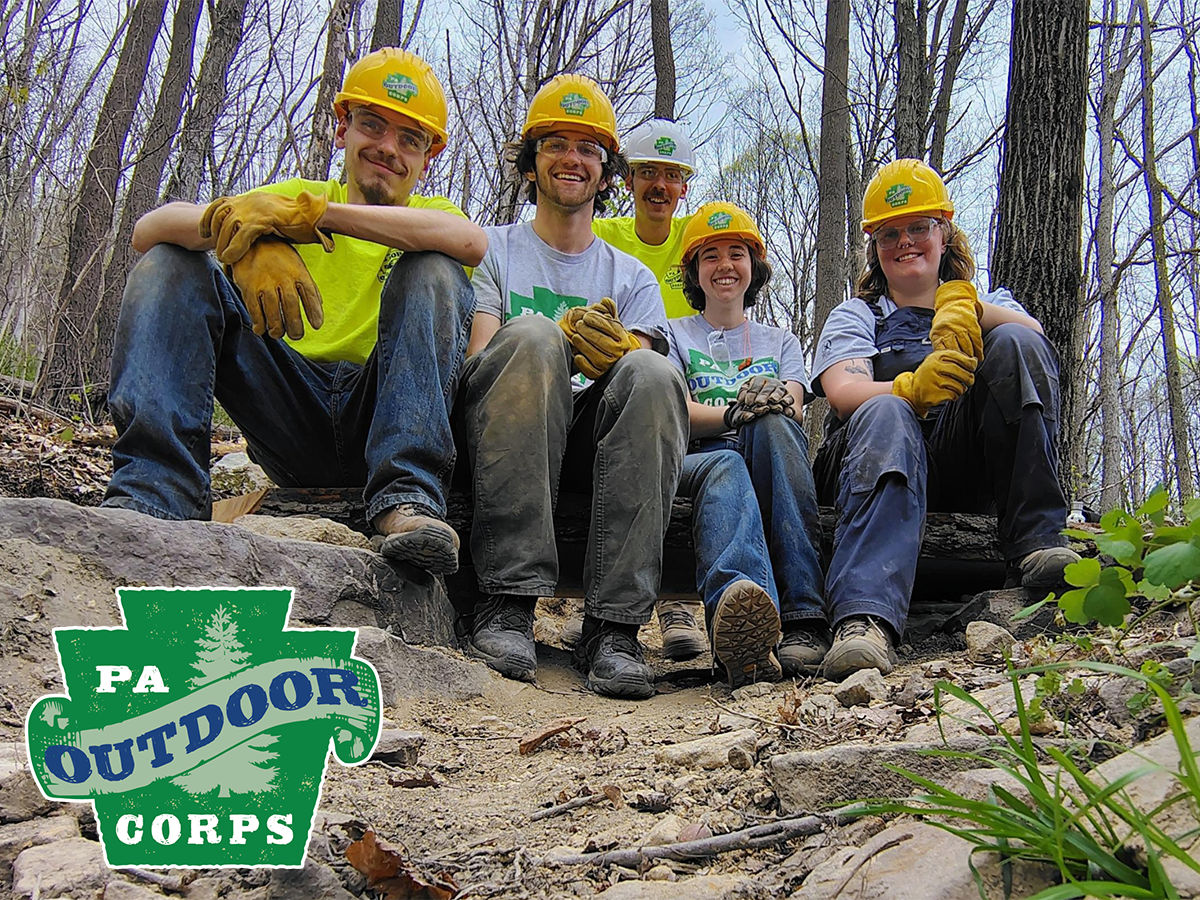
Pennsylvania Outdoor CorpsYouth and young adults who complete recreation and conservation projects on Pennsylvania’s public lands can get paid and gain work experience, skills training, professional development, and environmental educational.
-
Penn’s Explorers Youth ProgramPennsylvania State Parks’ youth program is an exciting way for young people (ages 4–17) to engage in fun, educational activities. Program participants, called Penn’s Explorers, track their visits to state parks and the programs they attend in their Adventure Journal.
-
Geology EducationThe rich natural history, abundant mineral resources, and varied landscape of Pennsylvania provides teachers, students, families, and the public many opportunities to enjoy and learn about geology.
-
Land Conservation and StewardshipConservation is not just part of DCNR’s name, it is deep-rooted in everything we do. We know that to make conservation truly successful every one of us needs to take action.
-
Recreation SkillsPennsylvania’s outdoor recreation opportunities are as diverse as its people and places. Four seasons, mountains, rivers, lakes, and millions of acres of forests and fields serve as the settings for nearly every type of recreation.
-
Scouts Conservation AwardsThe Forest Conservation Award honors both boy and girl scouts for their hard work on projects related to nature.
-
Water EducationWhether you want to explore your local stream, measure the turbidity of your state park lake, or learn how a dam works, the department offers hundreds of programs throughout the year focused on water.
-
Wildlife EducationPennsylvania’s wildlife is as diverse as its rivers and forests. To spot an elk or see a bald eagle is experiencing Pennsylvania at its wildest. Many wildlife-focused educational opportunities for individuals and families are offered throughout the year.