Maintenance
Passing the Torch: Seal Coat Day Trains Next Generation of Maintenance Forces


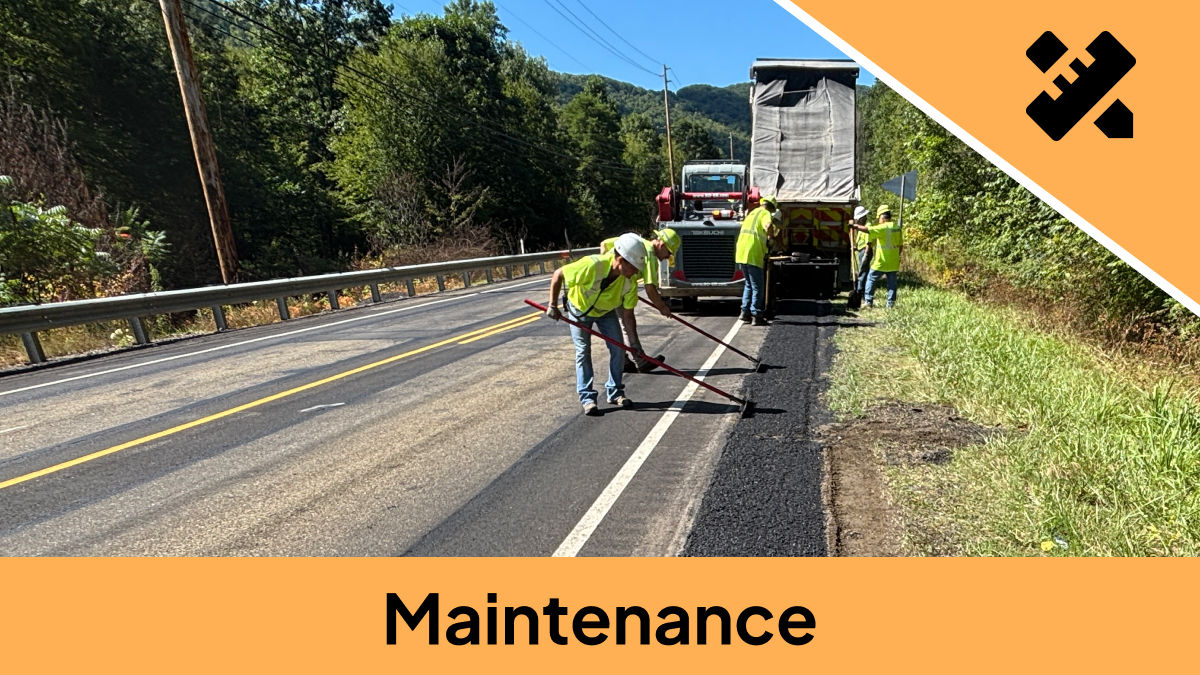
 The Seal Coat Day was developed to pass along institutional knowledge relative to this core maintenance activity to the next generation of county maintenance forces.
As new employees continue to join PennDOT’s ranks and more experienced employees depart, developing new tools to pass along institutional knowledge becomes increasingly more important. Seal Coat Day is a program developed by District 2 Maintenance Operations Manager Jason Powell to pass along institutional knowledge relative to this core maintenance activity to the next generation of county maintenance forces.
“When Jason approached me with the idea of a Seal Coat Day, I was 100% on board,” said Steve Young from PennDOT’s Operations and Performance Division, who assisted with the program. “It made me reflect on when I started at PennDOT 25 years ago. I had co-workers on the seal coat crew, all with 20-plus years of experience. The older generation passed on their experience to the newer employees and basically trained us on the job. With the increased turnover in recent years, that knowledge is leaving our organization faster than it can be passed down.”
District 2 held its first Seal Coat Day at its Quehanna Training Facility in May 2025. Powell said the training consisted of discussing the various forms that need to be completed before engaging in a seal coat operation, proper personal protective equipment, and how to calculate application rates for oil and aggregate.
“In recent years, counties have shifted their patching techniques to more mill-and-fill operations with 19mm asphalt,” said Young. “This gives you two different road textures, resulting in two different absorption rates. Adjustments need to me made in the application rate of oil if these patches were not previously sealed.”
Young shared that they have experienced increased road temperatures during the seal coat season the past few years. With these obstacles, seal coat becomes as much of an art as it is a science as application rate adjustments must be made as to how the oil is being absorbed into the roadway.
The Seal Coat Day also consisted of District 2 Equipment Manager Jason Belsole highlighting basic daily maintenance, best practices, and controls for operating the oil distributors and chippers in the district’s fleet, which consists of six asphalt distributors and three chip spreaders across District 2’s nine counties. Since equipment breakdowns can result in significant delays, time was dedicated to discussing common equipment breakdowns and how to address them quickly via the use of the Uptime Kits developed by the district in 2022.
While Powell categorized the day as largely successful, he did identify some areas for improvement. He said that having more than one distributor and chipper onsite for the training will allow them to get through their agenda more rapidly. He also said consideration will be given to splitting the training into two days for its next iteration, one day for the northern counties in the district and another for the southern counties. This will give each crew more opportunity to ask questions during the theory portion of the agenda and more time to interact with the equipment during the afternoon.
 The Seal Coat Day consisted of discussing the various forms that need to be completed before engaging in a seal coat operation, proper personal protective equipment, and how to calculate application rates for oil and aggregate.