Design
Revolutionizing Project Delivery: PennDOT District 1 Leading the Way in 3D Modeling Initiatives


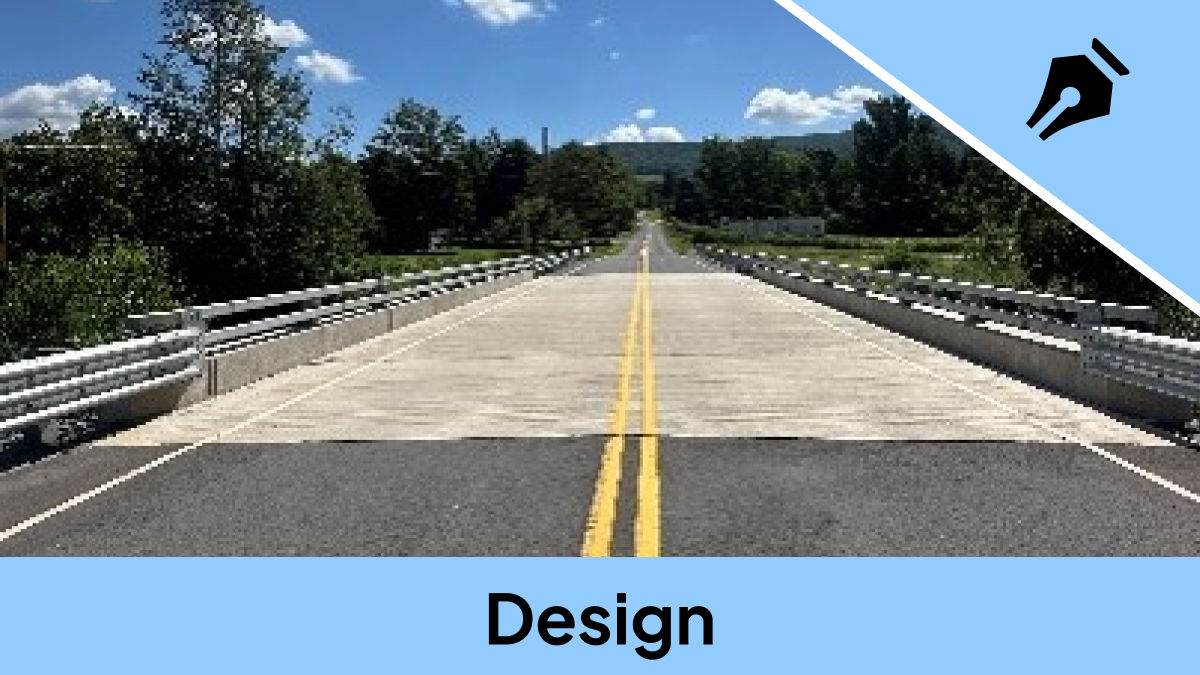
As part of PennDOT’s Digital Delivery Program and ongoing transition of 3D modeling, Engineering District 1, located in the northwestern corner of the state, continues to lead the way in modernizing project delivery processes, including the completion of the first in-house 3D design project with the construction of the Mageetown Road Bridge in Crawford County in 2024.
For its 2025 design project, District 1 identified one of the bridges on Route 6, also in Crawford County, as a good candidate for the state’s pilot program. The contract was awarded in 2025 as the largest 3D model deliverable in Pennsylvania. Construction of the bridge is slated to start in spring 2026.
Helping various project managers and consultants work through the newer processes connected to digital delivery is District 1’s Bridge and Structural Design Supervisor Mitchell Fabry. Fabry led the district’s effort on the Mageetown Road project in 2024 and continues to assist PennDOT’s Bureau of Design and Delivery with statewide digital delivery efforts.
“Digital delivery has completely changed the way we look at a project,” said Fabry.
 3D modeling provides a more extensive level of detail that helps designers identify conflicts more easily and better communicate design specifics with construction teams.
Instead of 27 2D project sheets, designers can now create one model that has a more extensive level of detail. With the 3D models, designers can identify conflicts more easily and communicate more comprehensively. Once the design is out in the field, the construction team can understand more thoroughly and directly what the project entails.
“The 3D models mean more detail about the intention of the design and less interpretation out in the field,” said Assistant District Executive for Design Tom McClelland, P.E. “This creates value for the taxpayer through a decrease in potential design errors, which leads to less project delays during construction.”
The efforts of District 1 are part of PennDOT’s statewide goal of having all design work for integral abutment bridges under 90 feet completed through 3D models by 2029. The regional team’s strategy of picking a variety of project types and doing a mixture of in-house and consultant designs offers people numerous training opportunities in preparation to meet that goal.
A first not only for PennDOT, but for any transportation agency in the U.S., District 1 has undertaken a bridge design using an Industry Foundation Class (IFC) document as a legal document for a project. An IFC is a standardized, open digital description for the Architecture, Engineering and Construction industry. The uniqueness of this project is that the design files are non-proprietary, or do not require a particular software brand, making it extremely versatile for designers, vendors, and contractors using their own in-house software in completing the entire bridge delivery process.
The project is also one of two in the state that are part of the Advanced Digital Construction Management System (ADCMS) Program, the next logical step in the Digital Delivery transition process. The ADCMS Program provides federal funds to promote, implement, deploy, demonstrate, showcase, support, and document the application of advanced digital construction management systems, practices, performance, and benefits.
“System upgrades of this sort involve challenges and training,” said District 1 Executive Brain MuNulty, P.E. “We are proud of how District 1, with guidance from Mitch and the Bureau of Design and Delivery team, has stepped up to not only meet the requirements of the initiative but develop some of PennDOT’s milestone projects for the Digital Delivery transition.”
 The efforts of District 1 are part of PennDOT’s statewide goal of having all design work for integral abutment bridges under 90 feet completed through 3D models by 2029.