Design
PennDOT Piloting Industry Foundation Class Models to Streamline Project Delivery Process


It is a long road for highway and bridge improvements to go from concept to construction. Improvements must be designed and engineered before they are put out for contractors to bid. Once a bid is accepted, construction can begin. This process of preparing, designing, and constructing improvements is known as the project delivery process.
A key component of the project delivery process is preparing a set of plans for when projects go out to bid. Plan sets have previously been provided in a two-dimensional (2D) paper-plan format. In recent years, there has been a push to modernize the plan sets from 2D paper-plans to three-dimensional (3D) digital models. The transition to 3D models allows for better visualization of the design and incorporates data throughout the entire life cycle of the project. Additionally, the 3D digital models act as a single source of truth and help to streamline the project delivery process.
In 2020, PennDOT created a Digital Delivery Strategic Plan to lay out the framework for the digital delivery process. The plan explains that the shift to a digital delivery process will improve design quality and reduce risk and project cost. Furthermore, the digital delivery process will increase construction efficiency and improve the as-built records. Shifting to a digital delivery process allows for significant cost savings due to the increased efficiency of the design process. Digital delivery allows designers and project managers to spend more time refining project design instead of having to prepare construction plans.
As part of this effort, PennDOT is piloting the use of Industry Foundation Class (IFC) models. An IFC model is a non-proprietary, open file format that allows for the interoperability among different software applications.
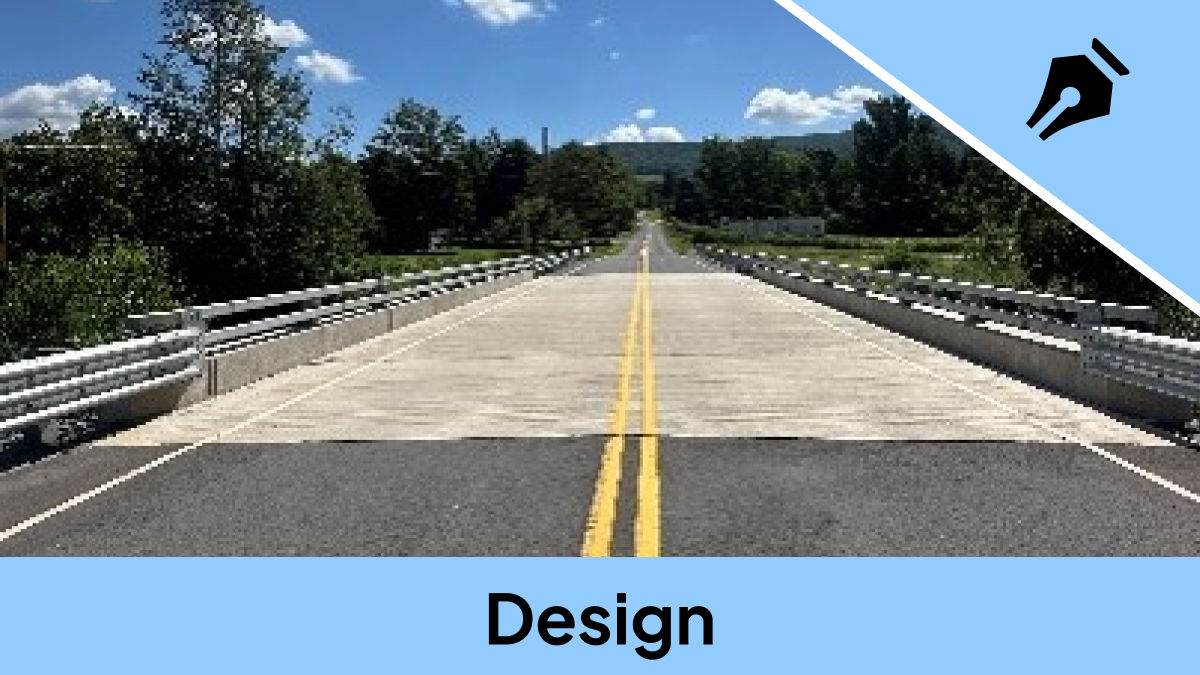
In 2025, PennDOT advertised a project for bid for the U.S. Route 6 (French Creek Parkway) over French Creek Bridge #3 contract in PennDOT’s Engineering District 1, located in Pennsylvania’s northwest region. This is the first transportation project in the country to provide contractual IFC models.
This innovative pilot program applies the International Organization for Standardization’s adopted specification for exchanging and sharing the 3D data between the highway design software to the models included in construction bids. For this pilot program, only the bridge design elements were provided as contractual IFC models.
The objective of this pilot program is to use open data standards to share design information with contractors as model-based deliverables that can be opened in the software of their choice without data loss. This project is part of a larger Advanced Digital Construction Management Systems grant awarded to PennDOT in 2023 by the Federal Highway Administration.
“It’s becoming more and more critical for the data to keep moving throughout the process instead of having someone recreate it each time,” said Allen Melley, chief of the Highway Design and Technology Division within PennDOT’s Bureau of Design and Delivery. “Digital models allow us to connect the data through each step of the delivery process and provide us with the opportunity to display or surface that data seamlessly. You will have access to the data at your fingertips.”
Using the IFC model allows for a greater level of information sharing with PennDOT’s transportation partners, improves the accuracy of the data, and permits better design visualizations across platforms. IFC models also increase the competitiveness of the bidding process by allowing small and disadvantaged businesses to be able to access construction data in the software of their choice.
 PennDOT is piloting the use of Industry Foundation Class (IFC) models, a non-proprietary, open file format that allows for the interoperability among different software applications. Using the IFC model allows for a greater level of information sharing with PennDOT’s transportation partners, improves the accuracy of the data, and permits better design visualizations across platforms.