Design
New Program Helps Local Partners Address Bridge Preservation and Rehabilitation


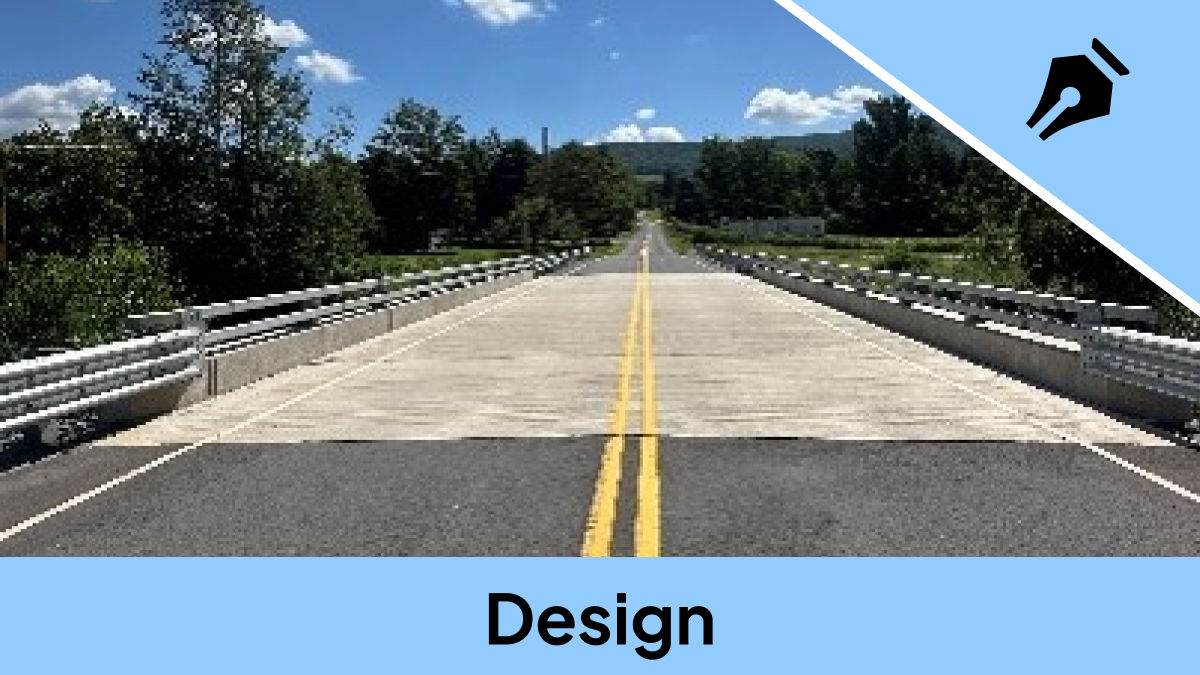
 Preservation work is complete on the Reed Avenue Bridge in the City of Monessen, Westmoreland County. The Reed Avenue bridge was one of seven bridges included in PennDOT District 12’s new Local Bridge Preservation Program.
Each year, PennDOT inspects thousands of state-owned bridges and oversees the inspection of local bridges. Although PennDOT has no direct maintenance responsibility for local bridges, federal and state laws require that local bridges are inspected on a regular schedule. PennDOT is also required to act if a bridge poses a risk to public safety.
Because of this responsibility, PennDOT district bridge staff develop and maintain professional relationships with the local owners. Uniontown-based PennDOT Engineering District 12 staff noticed that many small municipal owners were having difficulty responding to their bridge needs. Additionally, some townships and boroughs were reaching out to the district for assistance.
"We are fortunate at PennDOT to have extensive and granular data on all our bridges," said Assistant District Executive for Design Jeremy Hughes, P.E. "This allowed us to not only take a closer look at the causes of differences in conditions among bridge owners, but also draw conclusion of how different sets of bridges might be maintained in an ideal world. Since we ultimately fund much of the local bridge work out of the same money that we use to work on our own bridge, we felt it was our responsibility to develop a solution to the disparities we were seeing."
The District 12 Bridge Unit found that while the condition of state-owned and county-owned bridges improved significantly over the last 20 years, the condition of the local system is about where it was 20 years ago. Furthermore, the age of a bridge upon replacement tends to be lower on the local system. This is despite several factors that tend to allow local bridges to last longer than state bridges. For instance, many municipalities do not use salt for winter maintenance, traffic volumes are often much lower, and bridge weight limit postings are lower.
This made sense to District 12's Bridge Engineer Mike Miskanin, P.E., given what types of projects tend to be programmed. Each year, PennDOT holds bid openings for bridge projects on behalf of municipalities, boroughs, and other local partners. Nearly all these bridge projects are replacements. This contrasts with projects on state-owned bridges, which includes bridge replacement, bridge rehabilitation, and bridge preservation.
Upon a more in-depth study of the local inventory, it became apparent that a lack of timely preservation was preventing local owners from getting the full life from their bridges. District 12 staff also discovered two interesting trends. First, larger bridge owners, such as counties and large cities tend to have their bridges programed for work during Transportation Infrastructure Project development. Second, district staff found that current funding practices disincentivize owners from performing bridge preservation and maintenance activities. Simply put, the best strategy for a municipality to manage a very small bridge inventory is to do zero maintenance until the bridge closes and is eventually replaced using funds from another organization.
"In District 12, municipal budgets can be as low as $50,000 per year to run all operations, including winter maintenance," said Miskanin. "This leaves local communities with little to no funding for bridge work, eventually resulting in local bridge closures."
In 2025, District 12 launched the Local Bridge Preservation Program, addressing seven local bridges. Several factors went into choosing the bridges, but perhaps most important was that the project addressed bridges at various points in their life cycle. District 12 staff wanted the project to be a demonstration of bridge preservation techniques that any bridge owner with sufficient means, whether a county with over hundred bridges, or a township with only one, can engage in on their own. Construction on the first round of bridges is complete, and District 12 staff is looking to begin preliminary engineering on the next group of bridges in early 2026.
Seeing the success of this project, District 12 now has dedicated funding to a Local Bridge Preservation Program. It will take several cycles of projects until there is noticeable improvement to the local inventory. However, District 12 is committed to continuing this program and encourages others to evaluate if a similar approach would work for them.